Weekly Mash: The Spirit of Tea
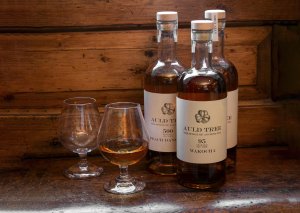
I don’t drink coffee. Not because I don’t like it, but because it doesn’t like me. So, I drink tea. Lots of tea, or to be more precise, lots of teas. When I heard that the fine folks at Postcard Teas had launched, what do you call them – distilled teas? Tea- based malt spirits? Malt spirit-based teas? I was on the phone straight away.
The ‘mad adventure,’ as founder Tim D’Offay calls it, started at the end of a meal at The Fat Duck when he and colleague Alex Simpson were intrigued by the restaurant’s whisky gummies. Could they push tea into a similarly different area? Seven years later came their response, Auld Tree.
After many trials, Alex, who has a background in brewing and distilling, hit on the formula of adding specific tea to a malt distillate base with the same tea also being placed in a botanical basket. After distillation, a final addition of the tea is steeped in the new spirit for around a week to add colour and helping to calm any feistiness.
‘It allows you to see the tea through a different prism,’ says Alex. ‘Distillation is a highly effective method for extracting and preserving the tea’s essence and flavour in a different way to water.’ After all, distillation is about concentrating flavours. Adding water is diluting.
The key was to ensure that the teas’ aromatics and flavours shone, that their tannins added structure, with the spirit supplying the foundation. Using a malt spirit made sense both from a flavour point of view but also to acknowledge the shared history between tea and whisky. A knowledge of tea blending helped the ‘Italian warehousemen’ of the 19th century understand the principles of whisky blending.

Although you can do coffee and whisky pairings (and in my coffee-drinking days, I did) for me there are greater commonalities in terms of flavour, texture, and complexity with tea. This is a drink which speaks of soil, cultivars, fermentation, roasting (or not), smoking (or not), diversity of styles and flavours. A drink of culture and ceremony.
‘Tea has been heavily influenced by alcohol,’ says Tim. ‘Not only in techniques, but utensils. Ewers and cups both come from wine, as does tea’s ceremonial and spiritual role. We knew there is always something in that world of alcohol to draw from in a respectful way.’

The three teas come from ancient trees which were grown from seed rather than the modern cultivars created at tea research stations. These ancient (auld) trees have developed natural mutations which align them with where they grow. ‘And,’ he adds, ‘the teas are also tributes to the masters who keep them alive.’ The way Tim speaks of them reminds me of conversations with agronomists and farmers who work with landraces of grains that have also adapted to suit their conditions. Seen this way, Auld Tree is simply continuing this centuries old relationship between the two drinks.
Is it the start of a new category? No. Is it a valid and fascinating exploration of flavour. Definitely.
————
 Auld Tree Wakocha (£125.00/200 bottles) is an organic Japanese black tea from a 95 year old tree and is made by Master Matsumoto on his 8 acre farm in Minamata-shi. [Postcard sells his tea under the name ‘Supernatural Black’] There’s an earthiness to the nose – fleetingly like grappa – with thick dark fruits, a nutty/malty underpinning, hibiscus and a peach top note. This is the most powerful and dense of the three spirits with plenty plum and damson, with a touch of petrichor in the back.
It’s almost creamy to begin, with subtle spice at work around the fringes of the palate before the fruits come through in the middle. Water bring out more earthiness though things become a little simple.
 Auld Tree Shui Xian (£185.00/75 bottles) is an Oolong from four 125 year old trees which grow in the inner Zhengyan area of the Wuyi Mountains (Fujian) and is made by Master Xu. The trees only give 15k of tea a year.
I’m a sucker for the rock teas of Wuyi and their incredible minerality. Here though the first thing which greets the nose is a clear fruit-driven aroma (grape skin and yellow plum) with the malt spirit adding its (hazel)nuttiness. The spirit is more apparent here and there’s some flashes of green within the fleshy fruit element. I got fennel seed for some reason.
The tannins are low, with the grapey quality and a little hay/grass. It benefits from a little drop of water, softening the fruit and making the mid-palate almost vinous There’s a back note of bilberry and, yes, some minerality. Tim and Alex describe it as being reminiscent of a brandy and I get what they mean – it has grape spirit’s zingy buzz.
 Auld Tree Peach Dancong (£295.00/50 bottles) is another Oolong, this time from a single 500 year old tree in Wu Dong mountain in southern China, cared for by Master Lin. Yes… 500 year old.
The purity of the fruit here is astonishing – think peach or quince eaux de vie along with a floral aspect. Highly refined and fascinating. It moves into membrillo-esque area and the spirit’s role has been reduced to a little touch of fresh cut grass – the way in which each tea reveals different aspects of the base spirit is fascinating.
These ethereal qualities mean that you approach it with a degree of trepidation, fearing that it might shatter. It won’t. There is weight here. The start has green grass, honeysuckle, those fragrant fruits and, retronasally, almond/marzipan. A drop or two of water makes things more substantial with greater solidity to the fruits, but still this frisson in the tongue. As with a great fruit spirit, one slowly sipped glass is sufficient.
In My Glass

While whisky’s top-end continues to struggle, and firms are rethinking their obsession with ‘premiumisation’, the mainstream is performing well. People are buying whisky, they are just conscious of how much they can afford to spend on what is, after all, still a luxury.
There is value out there. Whiskies at a price point that hits that sweet spot – and which delivers on terms of quality. It was intriguing then to see that Waitrose has launched a three-strong range of single malts in collaboration with Ian Macleod – unusual as the identity of the suppler is usually opaque. All are priced at under £30.
Speyside (40%/£25)The most precise of the three. Lightly nutty and grassy with some soft fruits behind. There’s a fair amount of spice here – nutmeg initially and, in time, dried raspberry. The mouthfeel is soft with a gingery drive running from start to finish. Medium-weight and and slightly short, but a sound everyday performer. A splash of water opens things up.
Highland (40%/£25) Is fatter with some citrus (grapefruit to begin with) and a nutty underpinning. As things warm up so a butterscotch element emerges – think butter icing and walnut cake. The citrus has now switched to bitter orange adding some zesty lift to a mix that now incudes mashed banana and pears in vanilla.
The palate is Demerara sweet to start (along with a tiny touch of blackcurrant) with mor of that creamy oak, but it’s well framed with some cinnamon, plumped-up dried fruit and caramel on the finish.
Islay (40%/£29) Smoke is there, but not oppressively so. This is the best balanced of the three, with character and cask working together well adding a new dimension to the delivery. The wood is subtle, while dark fruit sweetness offsets the rising purple haze of smoke. There’s a tiny medicinal edge and a mix of pine resin and Sichuan pepper on the lively palate as the smoke fades into embers. Doesn’t mind water – or soda. A wee cracker.