The Weekly Mash, Friday 12th December
Time has passed. A book tour to Scotland followed by illness brought on by a freezing sub-basement room in an Edinburgh hotel, then Spain for Whisky Live, then illness … anyhoo … some potentially mildly fevered thoughts await … read on my lives, read on …
1. EDINBURGH to FIFE

The firth expands as the train heads into Fife. On the opposite bank the line of Berwick Law, Bass Rock and Lamb. In front of me farmland. Thin, spindly silver birches reclaiming the edgeland where for centuries men worked the black seam. The pitheads have gone, replaced by dead sitka zones, clear cut pine. We pull into Markinch where the mighty Haig Coronation bond remains under threat of demolition. A past erased inside a lifetime. Skills lost.
Last night’s chat was about art, science, and craft and how the first is transitory, while the last is replicable. Learning by repetition, by hand, ear, smell, and touch. Whisky is a craft. It is how the old guys were trained – the noise of the still, the aromatic puffs as it began to come in. Smell of washback, feel of timber. In time it would become intuitive and you became part of a new sensory world.
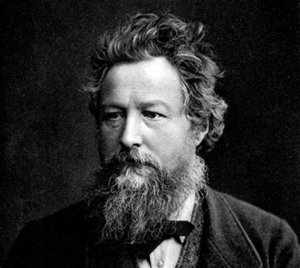
Single malt can draw parallels with the the principles of William Morris’ Arts and Crafts movement; his fight against mass production and finding the beauty in the hand-made and utilitarian. Those tenets would instead become signifiers of a trendy bourgeois lifestyle – all that wallpaper, those drapes. Has whisky followed that same path, or are today’s small independent distillers closer to the Arts & Crafts in their back to core principles, and hands-on distilling?
I’d bumped into Bob Dalgarno (ex-Macallan, now Glenturret) at the airport. One of his comments had stuck with me. ‘Whisky has always been a drink for the working person,’ he’d said. ‘We shouldn’t forget that.’
Craft isn’t just the high blown, it is the recognition of human creativity and endeavour. There was craft in mining. It exists all the way through whisky-making, from malting to coopering. Another phrase from last night re-emerges, this time from former Diageo blender Keith Law. ‘I was always aware that we were taking care of other people’s work,’ he’d said. ‘We had to respect it, knowing that they were looking over our shoulders, saying “take care of our work”.’
Whisky seems robust yet it, like any craft, is fragile. Traditional crafts are disappearing. The stories and skills can go within a generation.
———
2 ST.ANDREWS

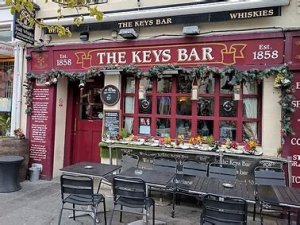
Salt crystals glitter in the blue pre-dawn, a street lamp imitating the moon. Remembering the din of The Keys the night before as the goals went in. The air of giddy incredulity. More drinks.
The Keys Bar is my kind of place. A locals’ bar (not that I am one). The beers are what you expect, but the eye is drawn to the stuffed shelves of whisky, all stickered, named, recommended. A jostling comprehensiveness. Is this a whisky bar? No. There’s no heavy furniture and dim lighting. No contemplative silence, no murmuring about significant nuances in production, no sotto voce debate over history. None of the performative pouring of the most expensive dram. They have their place, but they make me itchy.
This is a whisky pub. A member of the same clan as The Grill, the Pot Still, Bon Accord, Bow Bar, Tipsy Midgie, Bennett’s, Kendal’s Union (more are available upon request).
These are the home of the hauf and hauf, of resting on the elbow worn bartop and sharing. Places where the enthusiasm of the owner is manifested on the back bar, but not in a self-aggrandising way, but because they simply love it. Some call them old men’s pubs, and draw the conclusion that their existence reinforces the idea that whisky is solely for that demographic, but look around any of them and see who is drinking there – old men are far from being the main clientele.
The concept of the whisky pub is also widening. The previous week I’d been hanging out (in pubs) in Belfast with Sean Muldoon who, with Jack McGarry, created New York’s Dead Rabbit. They took the tradition of the Irish pub but avoiding any Paddywhackery, combined top-end cocktails with pints and drams. Respecting the best of the classical, but updating it – something that’s in turn been adopted by The Gate, Dram, or Cut Your Wolf Loose.
Pubs provide that all important third space, a neutral place for a community and the occasional blow-in like myself. Non-elitist, welcoming. These are the places where whisky holds on, where it has its roots. They are also where it is moulded. Single malt wasn’t built by brands, but by people drinking and sharing whiskies from independent bottlers, by enthusiasts starting a community, preparing the ground on which the brands could grow. It still comes from the people behind the bar or the shop counter, and those they serve.
Whisky won’t be (re)built by people sitting at their desks analysing data. It will be energised by them getting out there, sitting at the bar, talking, tasting and, more importantly, listening. It is shoe leather. It is visiting, asking, taking an order, and then returning just to sit at the bar, and then returning again. It is relentless, tough and often seemingly thankless, but it is the only way.
——————
3 FALKIRK
A day of ghosts …
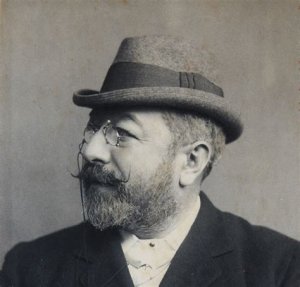
At Rosebank, Arthur (Motley) and I talk as Liquid Antiquarians about Alfred Barnard, the clubbable man, the open-eyed discoverer. His voice, with its sense of optimism, the heft of industry set against this wild landscape or within growing towns and cities. The balance struck between the Victorian interest in engineering and the Romantic ideal. The mix of other voices too: owners, managers, brewers, distillers, coachmen, and unidentified companions.
The things he missed: the lack of tasting notes, how long were the ferments, why does no-one talk about casks, Alf?, but its wrong to blame him. That’s us imposing a 21st century geek’s view on the Victorian era.
We read his book as an account of a prosperous industry, but his carriage and train wheels were taking him over the ruins of whisky’s last cycle, just as the next downturn was beginning to emerge. And here we are again… The ghosts shift and mutter. ‘Ozymandias.’ ‘Don’t repeat our mistakes.’
It is easy to be so caught up in the apparent effectiveness of a strategy that you forget to pause and reflect on the big picture. You can see it with the current travails of the majors. Seduced by the City, then caught in its Faustian pact of demanding constant growth. Panicked into making short-term decisions when long-term thinking was required. Forgetting people and stories, and failing to water the roots.
4 STOCKBRIDGE
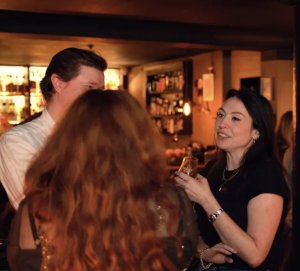
In candlelight flicker, we sit in the Last Word and drink Port Ellen. Two bottles generously offered up by Fraser Campbell and Arthur to raise money for the MacLean Foundation. An occult gathering about sharing, mourning, rejoicing in the whisky’s destruction.
In its drinking is the acceptance of the inevitability of an end. This is what is it was laid down for. It was always meant to be consumed, just not like this. In the drinking we summon the spirits of those who made it, those who went before, and those who closed it down.
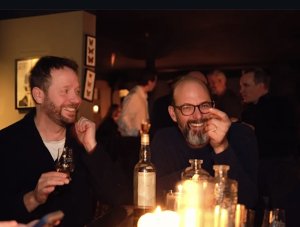
Port Ellen survived not because of its owner, but because of the community. It was bottlers and maniacs who raised its profile, just as it was with Brora and to a lesser extent Rosebank. They were the fortunate ones – where’s the love for Millburn, North Port or Convalmore? It is easy to be forgotten, become a footnote and it happens quickly. Distilleries close, business empires fall.
‘Respect it, know that they are looking over your shoulder. Take care of our work.’
—————————————-
In My Glass
 The Caoineag, Ben Nevis 6yo, TWE Exclusive (55%/£59.95)
I wasn’t sure what to expect with this – something edgy, punchy, maybe a restless oily sea. From first glance it’s clearly more than that – the rich colour suggesting that the cask might have calmed any youthful feistiness. Then, unexpectedly, there’s smoke. Behind it, hot tiles, a roasted cereal, stewed Assam tea and only then some supple, freshly-oiled leather showing it is indeed a Ben Nevis. The smoke is cut with a light brassy note then, totally bizarrely, bubblegum (Bazooka Joe), strawberry chews and rose petal.
The palate is darker and more dense than the nose and though none of those estery top notes survive, things take a more resinous turn (frankincense appropriately enough) while the oils cling to the palate as classic Ben Nevis filth and woodsmoke come surging through. I’d take it neat – and frequently. A real belter.
 A Good Old-Fashioned Christmas Whisky 2025, 16yo Highland (TWE exclusive) (55%/£80)
As dark as Santa’s boots, this is one of those slightly perfumed, fruity sherried drams – Cream rather than Oloroso if you get my drift. There’s a mix of black cherry, damson, toasted almond, plum and rich weight. In time it moves towards Ribena and fruit tea. Water brings out more savoury elements, some raisin and a little flamed orange peel.
It’s soft in the mouth, initially like a booze-drenched, sweet Christmas pudding, but cut with the bittersweet notes akin to vintage Port with soft, yielding tannins. A dry earthiness emerges towards the back, stopping things becoming too flabby. A charmer for slow, easy, late-night sipping with a bowl of nuts and a mince pie by your side as your eyelids begin to droop after the day’s exertions.
————————–
In My Ears: Brightly Shone The Moon
 Seasonal music from the wonderfully prolific Laura Cannell. ‘Alternative Christmas music for those who love and mourn in a season where darkness is everywhere.
‘A time when the winter sun is shy, but the moon lights our nights and encourages our strange songs, traditions and hopes for the unfurling of a new and better year.’
Enjoy…
If you liked, this please do share your enthusiasm with friends and colleagues. Things will be getting more professional soon …