Mizunara, water, flaming bagpipes and rabbit holes
The brothers MacLean finally pulled into Cairns’ harbour on August 30 last year having completed their epic 139 day, 9,750 mile, non-stop row across the Pacific. It proved to be the most dangerous moment of the whole journey as Jamie’s bagpipes caught fire. A quick plunge of the drones into the water averted disaster. Apparently they still function.

The row raised in excess of £1m, giving 40,000 people in Madagascar clean water for life. Their fundraising is continuing with initiatives such as this – 248 bottles of a 34 year old Auchroisk (44.5%).
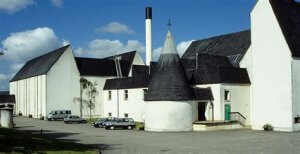
This was one of the first distilleries I visited in Speyside, back in its Singleton days when it was being hailed as the next big thing by then owner J&B. In 1997, J&B’s parent IDV merged with Guinness, out of which marriage Diageo would eventually emerge. Dare one ask whether we are about to enter another era of consolidation like we saw then? Yes, I believe one can.
Anyhoo, the Singleton of Auchroisk was soon dropped from Diageo’s single malt first team and has spent the intervening years as a quiet dependable supplier of fillings for blends. Finding one of this age is a rare thing.
The one the brothers have chosen has been lying in state since 1991. What is more surprising is that it has been in a new (i.e. first use) cask for its entire life. As this wasn’t common practise back in the day, this might have been part of a research project which was either squirrelled away… or lost.
As new oak is pretty punchy, you’d expect that three decades on you might be picking skelfs out of your tongue – or that the distillery character will have been beaten into submission. Far from it. The balance here is excellent.
Might it be the case that once the whisky has soaked up all that the cask has to give that things begin to slow down and, given time and air, an equilibrium is re-established? It’s an intriguing thought.
There’s a gale blowing as I write this. Salt spray is lashing in off the sea, which seems appropriate given the link to the row, but also because here is a fine example of finding the most appropriate dram for an occasion. This is often a matter of finding commonalities between flavour, and weather, season or mood. Here it’s different.
This is the right dram for this moment because it is the opposite of the wintery blasts. It puts you in a sun-dappled golden hour in late autumn. It warms, countering the reality of what’s outside.
There’s fruit in here, but not of the tropical variety. Here it has been bletted, the sugars crystallised and crunchy. There’s dark maple syrup and while the frame of wood is there it’s not dominating.
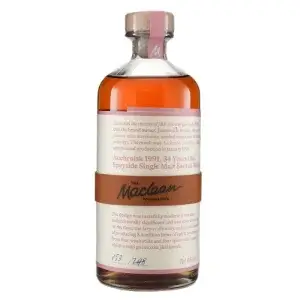
The fleeting taste on the tongue’s tip is like licking envelope glue (that’s something you don’t get with WhatsApp) before a mix of fruits, nut, marzipan, cedar, and a hint of varnish flows across the tongue. There’s a tingle of heat, even though it’s relatively low strength, but only a droplet of water is required to calm things.
The combination of oxidised notes with sweetness is somehow reminiscent of Vin Santo – one of Italy’s finest vini da meditazione. Well, here’s a meditative dram to match. I can imagine the brothers sitting in their croft, fire on, gale blowing, safe, warm, taking it slow … as if.
This costs £349 and is only available from the always excellent Royal Mile Whiskies. Each bottle sold will provide at least one person with clean water.
___________________________
The rumours that Suntory was readying two new Yamazakis aged wholly in mizunara casks first surfaced last year. Although the pair – 18 and 25 years old (the latter the distillery’s oldest 100% mizunara release) appeared in August, samples have only just arrived. It was worth the wait.
The combination of distillery and cask takes me back to my first day in Japan when Michael Jackson and I were given (blind) two cask samples whose aroma was unlike anything we’d experienced before. It turned out to be mizunara.
I asked how the team described this intense, yet haunting fragrance. ‘We say it smells of temples,’ replied Seiichi Koshimizu – chief blender at the time. I took him at his word – there hadn’t been temple time factored into the day. It was a thread I wanted to follow. Not because I disbelieved him, but whisky is about heading down these rabbit holes. Don’t just take things at face value, ask why, then find out.
Of course Koshimizu was right. The aroma is that of a temple, but more precisely the smell of the incense burned there which, over hundreds of years, has penetrated every surface. It is incense, plus wood, plus time.
The next question was, why does the incense smell like that? The answer was found in an incense house in Osaka reached by the Studio Ghibli-esque ‘Giant Panda Happy Train’ which rocked and squeezed itself between houses, sometimes so close that you felt that you could lean in and grab a cup of tea.
I discovered that one of the main ingredients in the temple incense blend was aloeswood (aka oudh) whose aroma is then similar to mizunara. Or to be precise, with mature mizunara. These days there’s any number of mizunara finishes, but its key characteristic, the aroma that stops you, baffles you, drags you into this sacred space only begins to emerge after 18-plus years. In other words, finishing is pointless – though it does allow you to charge more.
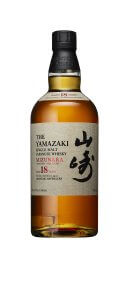 So then, to these new arrivals. The 18 year old (48%/£1,600) mingles the incense with pineapple, saffron, a touch of lemon shortbread, peach, cherry (fruit and blossom). It starts gently, then a mix of bold spices (clove, five spice) builds, along with some tangerine peel – even some old school Yamazaki warm tatami and sandalwood. There’s a slight sour plum note towards the finish adding another layer.
It’s appropriate that mizunara is used throughout the Yamazaki range because the distillery is built on what was a huge Buddhist temple complex. It’s another rabbit hole. I’m not suggesting that Suntory used mizunara because of this being a clever marketing construct – its original use was down to expediency – there were no sherry casks or American oak post-War. Mizunara is hard to cooper, it leaks, it’s expensive.
When imports of casks returned mizunara fell out of favour and only returned when Dr. Koichi Inatomi (another former chief blender) used it when he created Hibiki. Now, its qualities have been studied (though the enigma of the temple smell remains elusive), more casks are being laid down, and new plantations are being established. That said, the connection between the old temple, temple smell and Yamazaki distillery adds another fascinating link between place and whisky
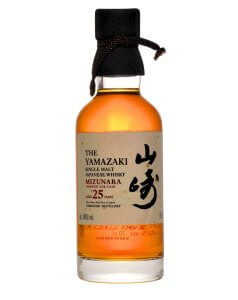
The 25yo (48%/£9,950) is a treasure chest of aromas with the incense permeating everything. There’s greater concentration, more of the scented wood (hinoki) and a hint of chocolate. I get a touch of green tea, some sweet persimmon, dried apricot, mocha. The incense fills the senses, and yet the structure is subtle – an incredible balance is struck here between the savoury and the sweet. There’s almost a little smokiness along with menthol. A drop or two of water adds weight and lusciousness. Ever evolving and highly complex.
Yes, it’s beyond the reach of most of us, but hopefully those who buy it will share.